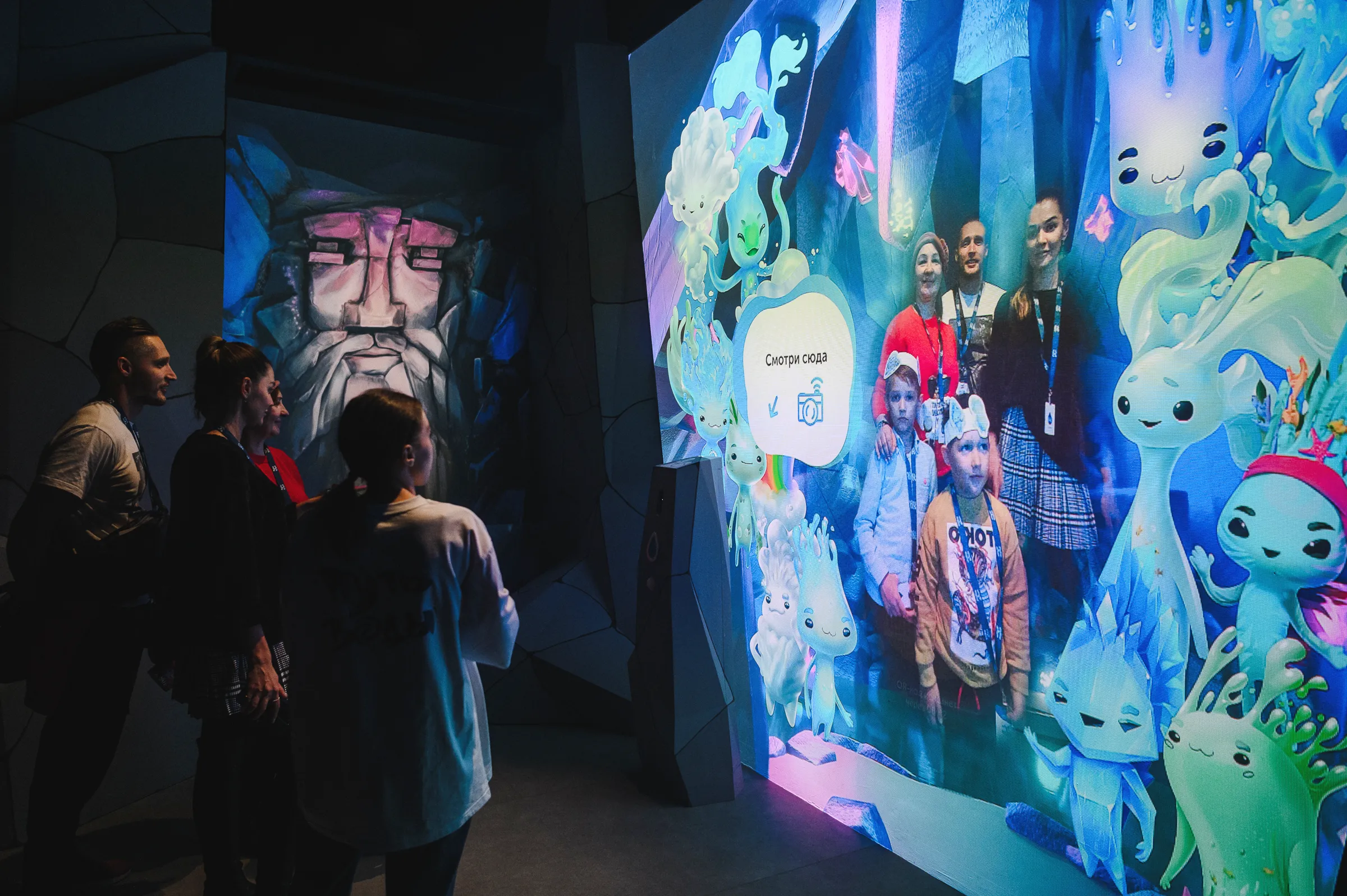

A multimedia exhibition by Moskvarium at VDNH.
Nature zone
City zone
Ocean zone
Arctic zone
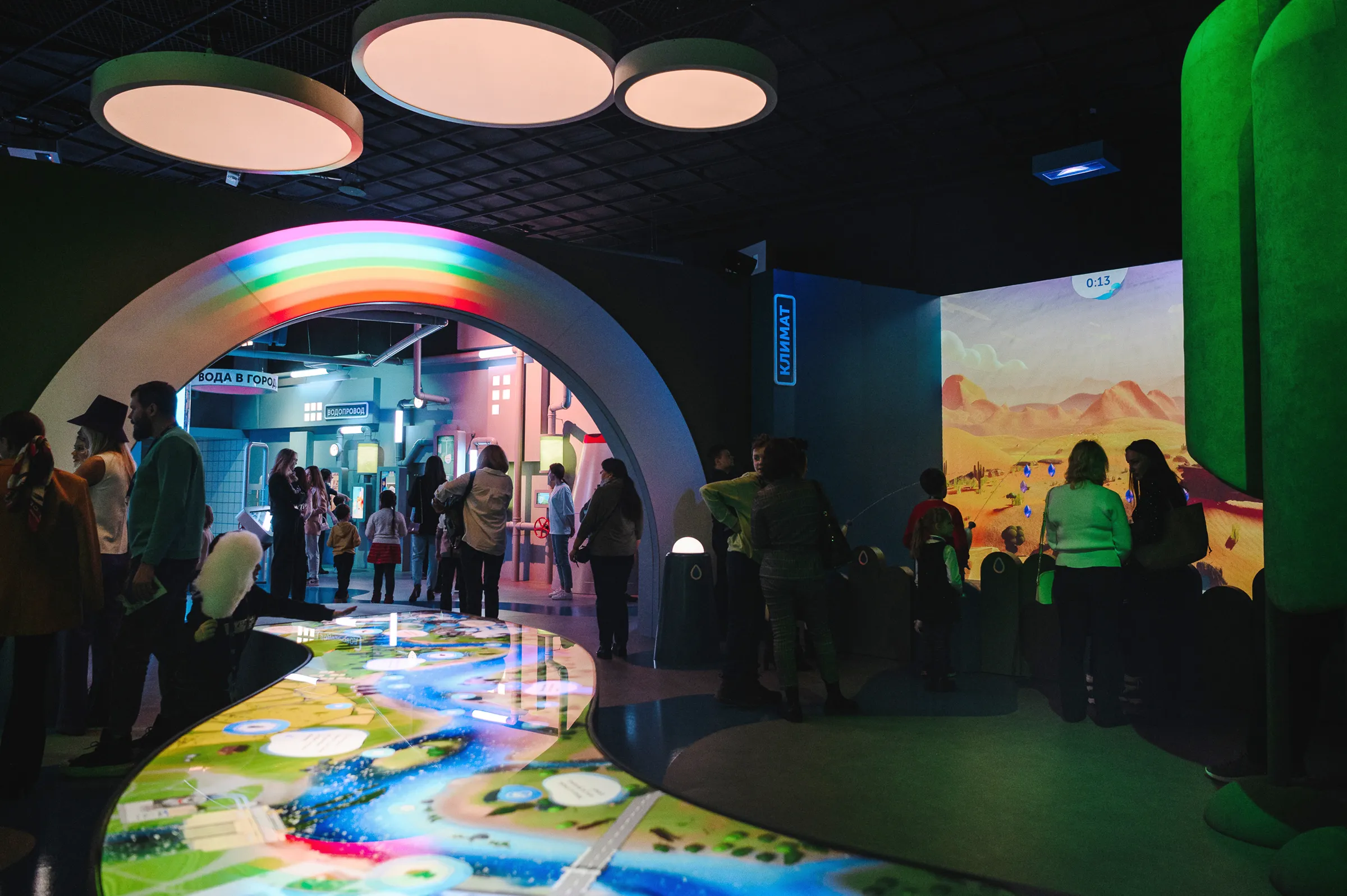
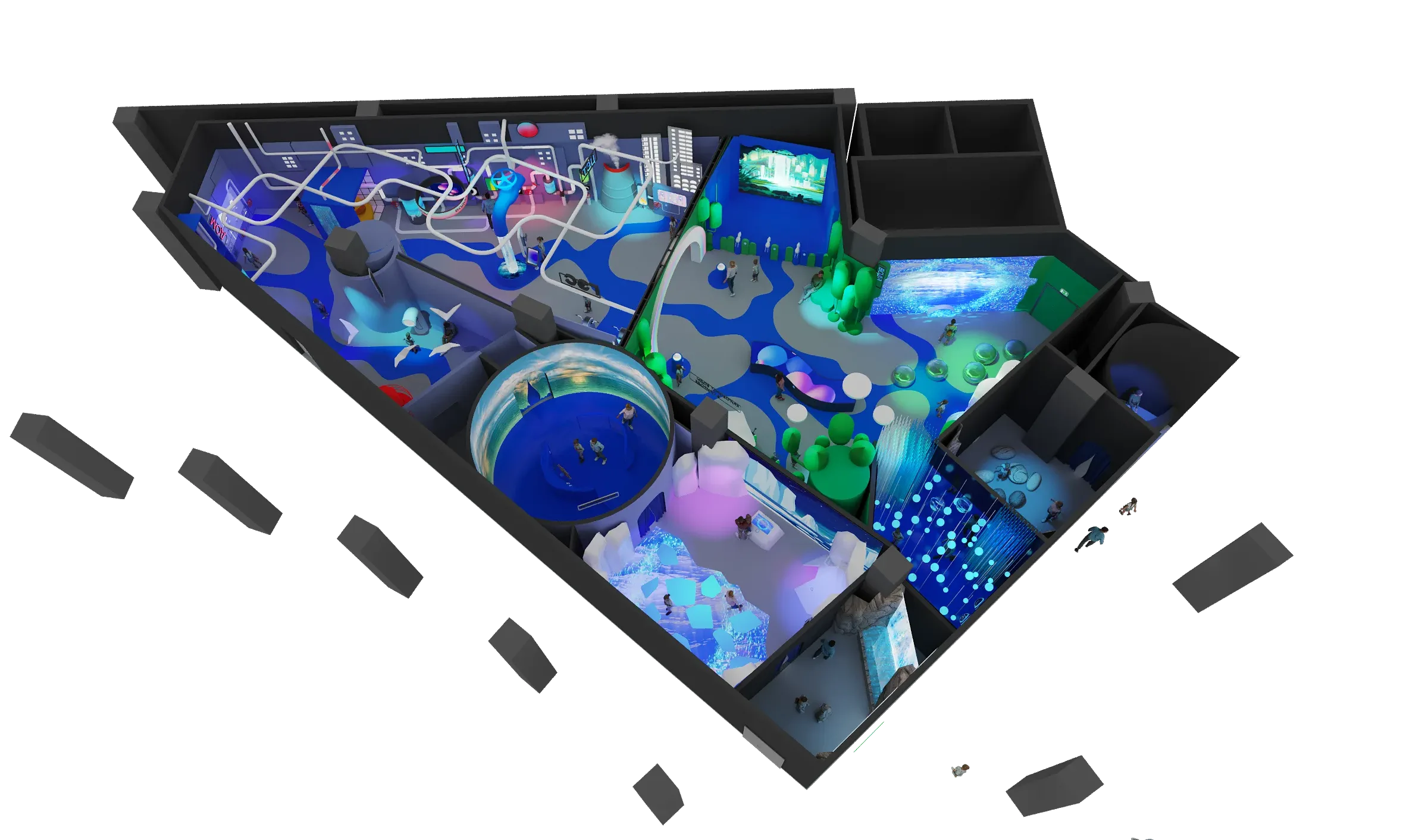
“Way of Water” is an educational multimedia exhibition by Moskvarium at VDNH. 500 m², 19 interactive installations and four thematic zones. The exhibition guides visitors through a real journey of water: forest → river → city → treatment → ocean → Arctic.
The task was not to frighten visitors with an ecological agenda, but to make water fascinating. Each zone is a chapter. Each installation is a moment of discovery. A child touches water with their hands. An adult thinks, perhaps for the first time, about where it comes from. A teenager explores the mechanics of water treatment — and it never feels boring.
Visitors don’t observe water from the outside — they move with it. The route is designed as a physical journey: the path through the space follows the path of an H₂O molecule from its source to the Arctic.
We drink water, wash with it, do laundry with it — and barely notice it. Yet it is the only substance on the planet without which no form of life can exist. Our task was to make that visible and tangible.
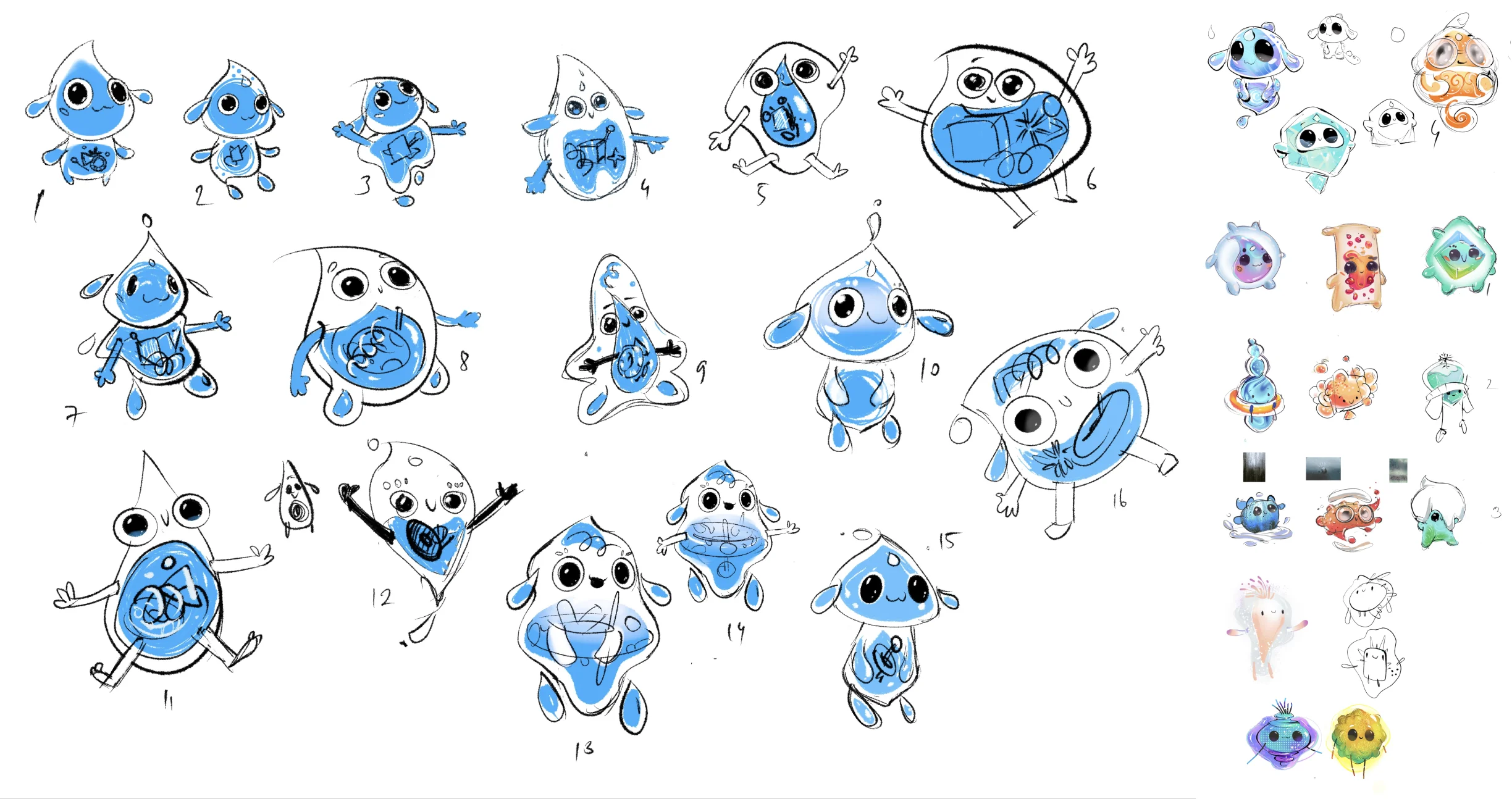
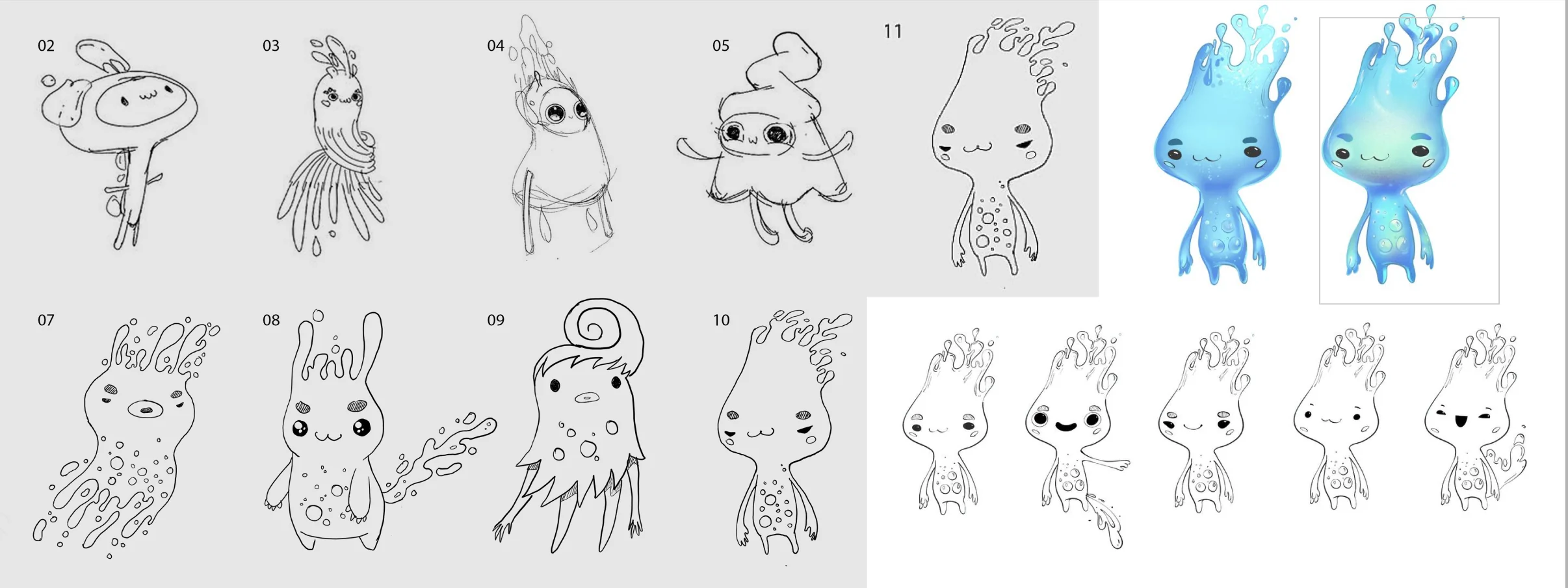
Fluid and unpredictable. Watty takes the shape of any vessel — yet always remains himself. The main guide through the exhibition.
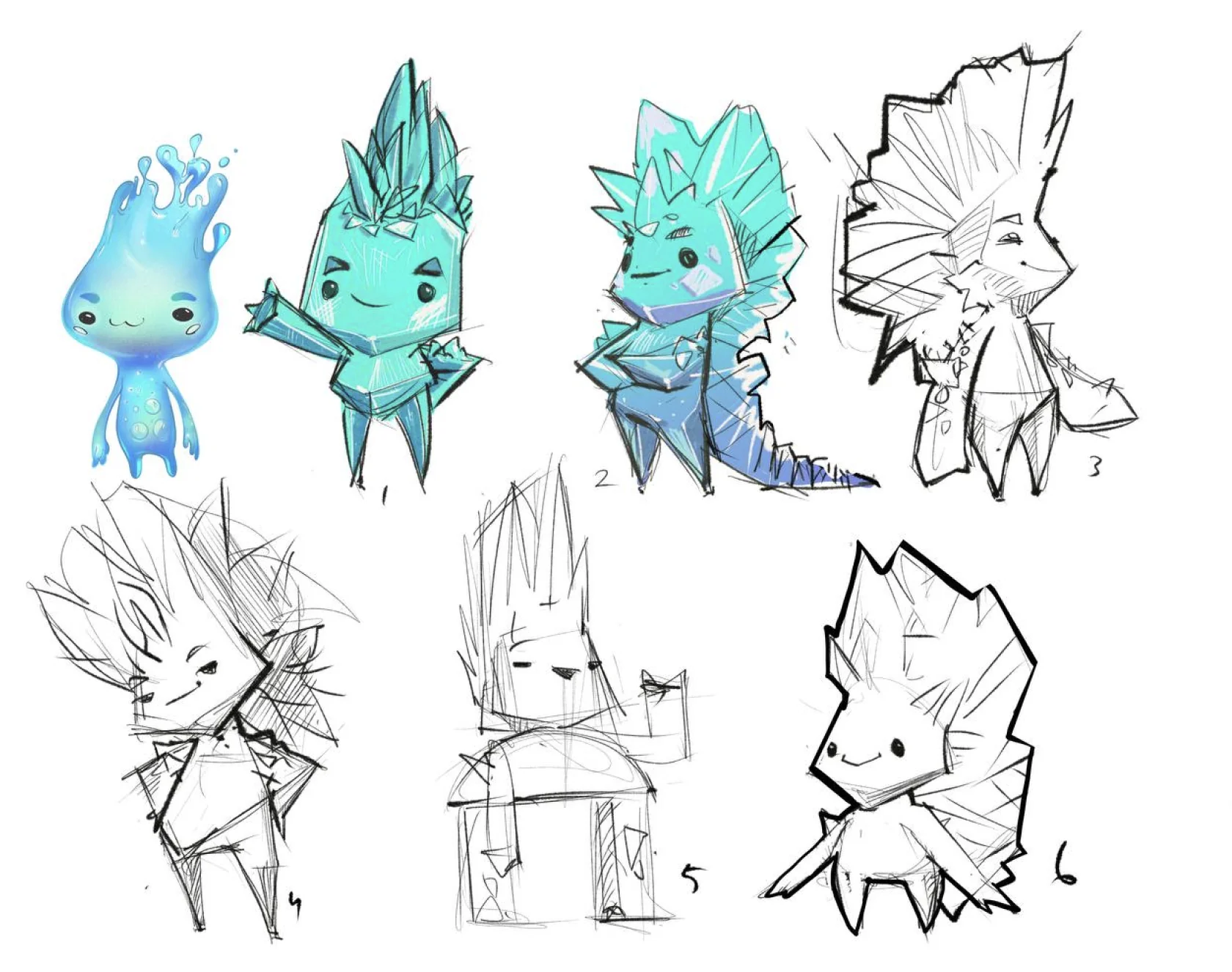
Cool, precise, and full of memory. Ice is the planet’s archive. Every tiny bubble inside it holds the air of past eras.
Invisible and everywhere. Steam is water in motion: pure energy without a fixed form. It is what brings water back to its source.
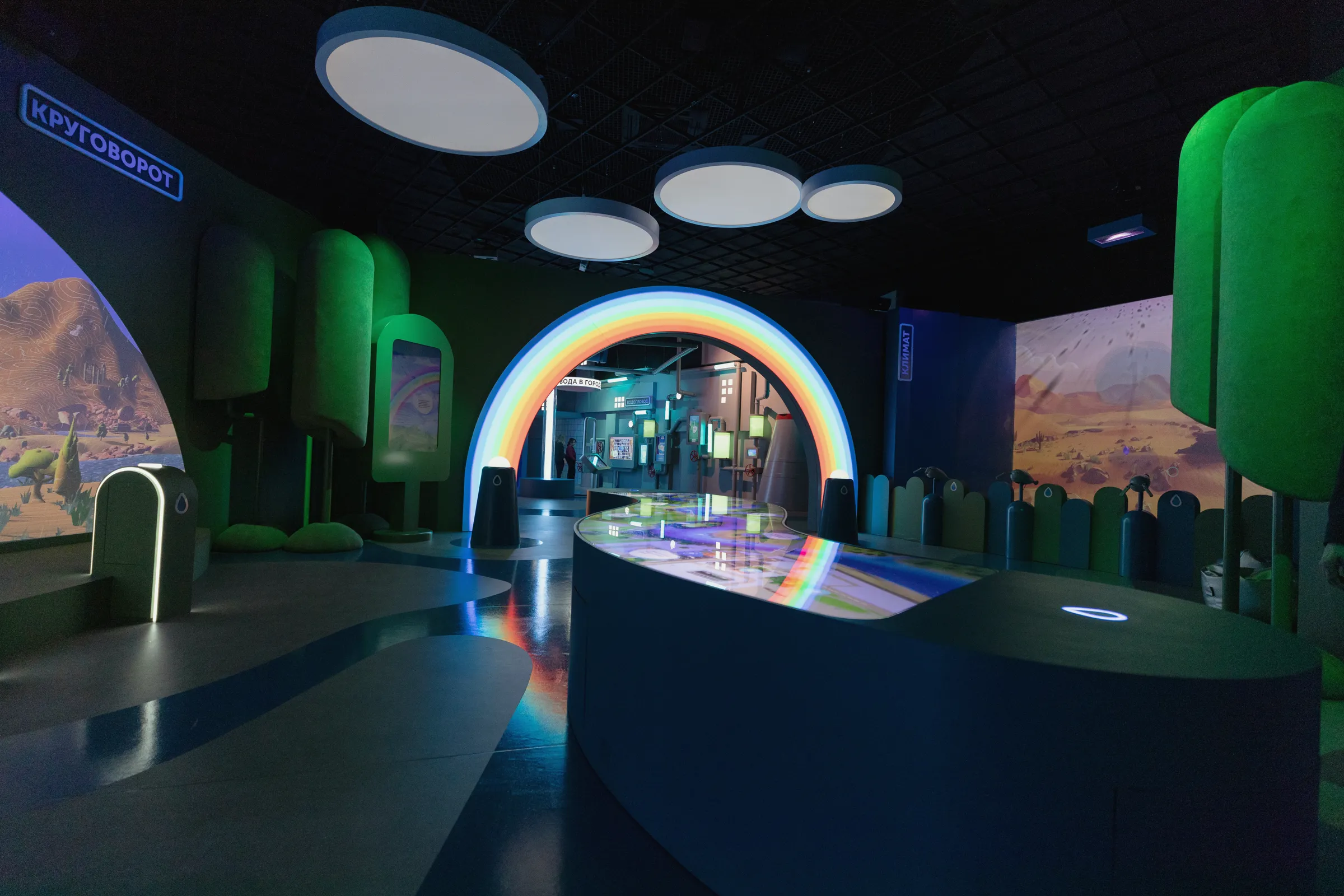
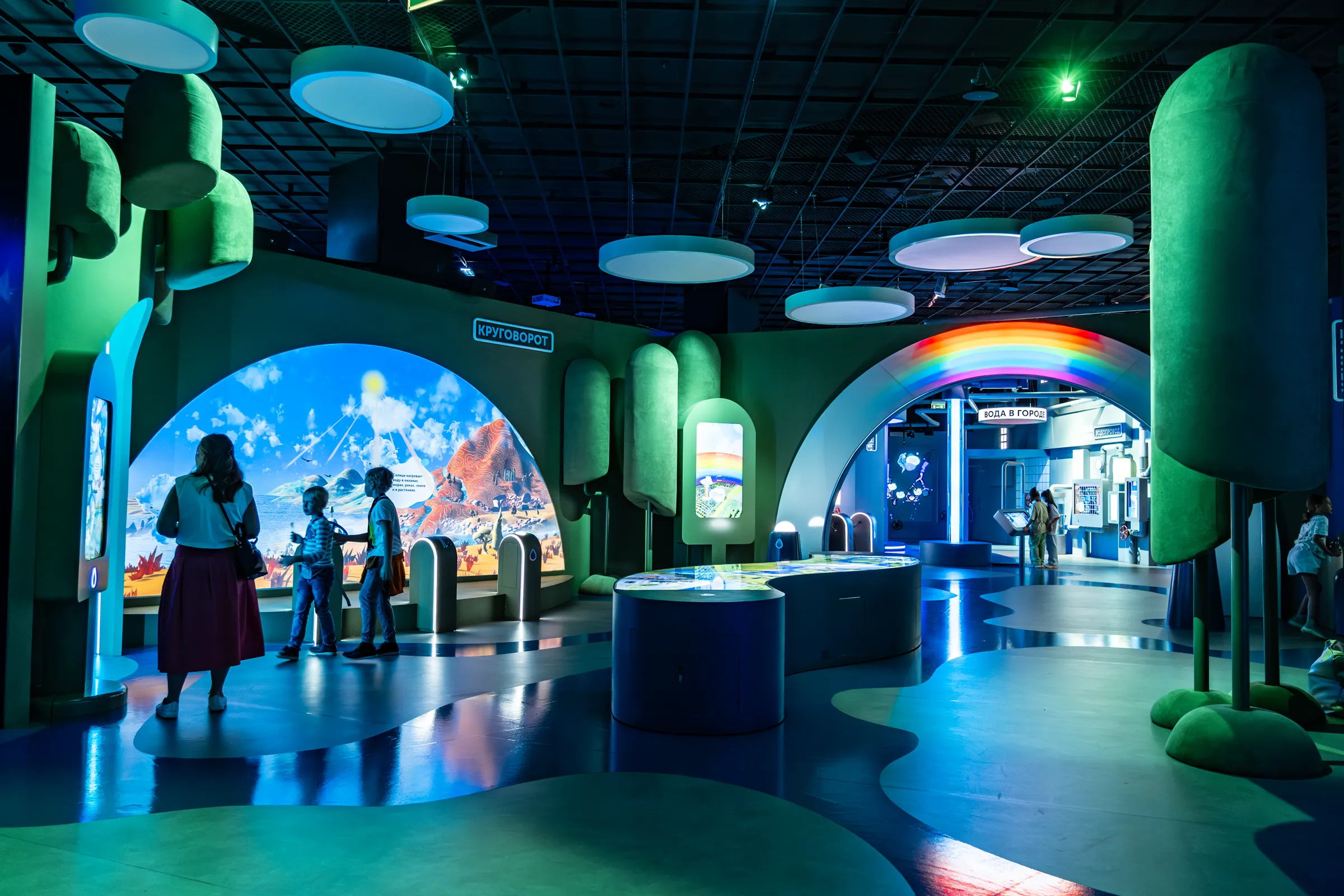
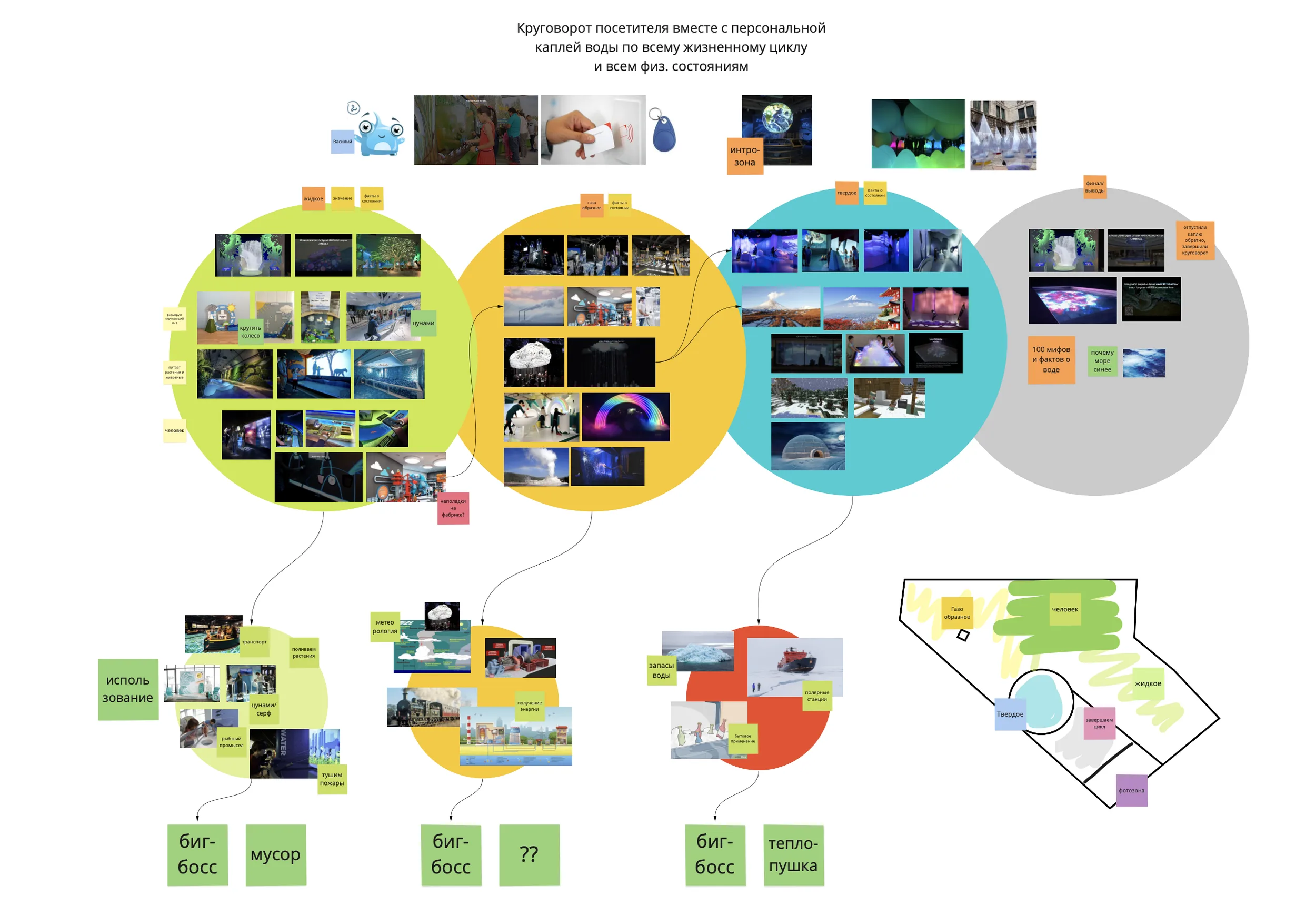
The four zones form a connected chain. Visitors follow water from its natural source through the city and the ocean to the Arctic. The zones are chapters; the installations are paragraphs.
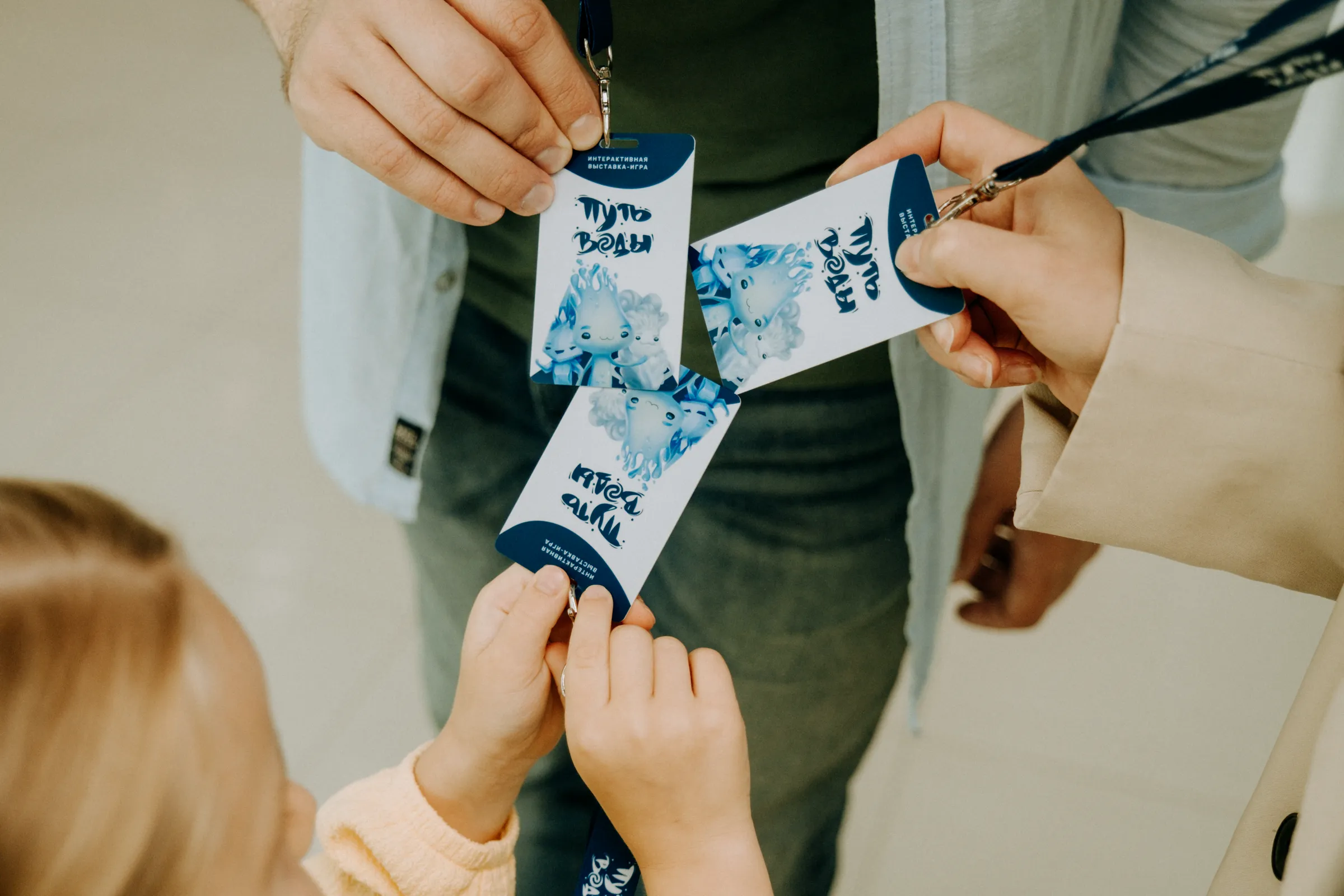
Each visitor receives a wristband. Each installation has a reader. A tap equals a drop added to a personal “Atlas of Water”. At the end, the route produces a personal result.
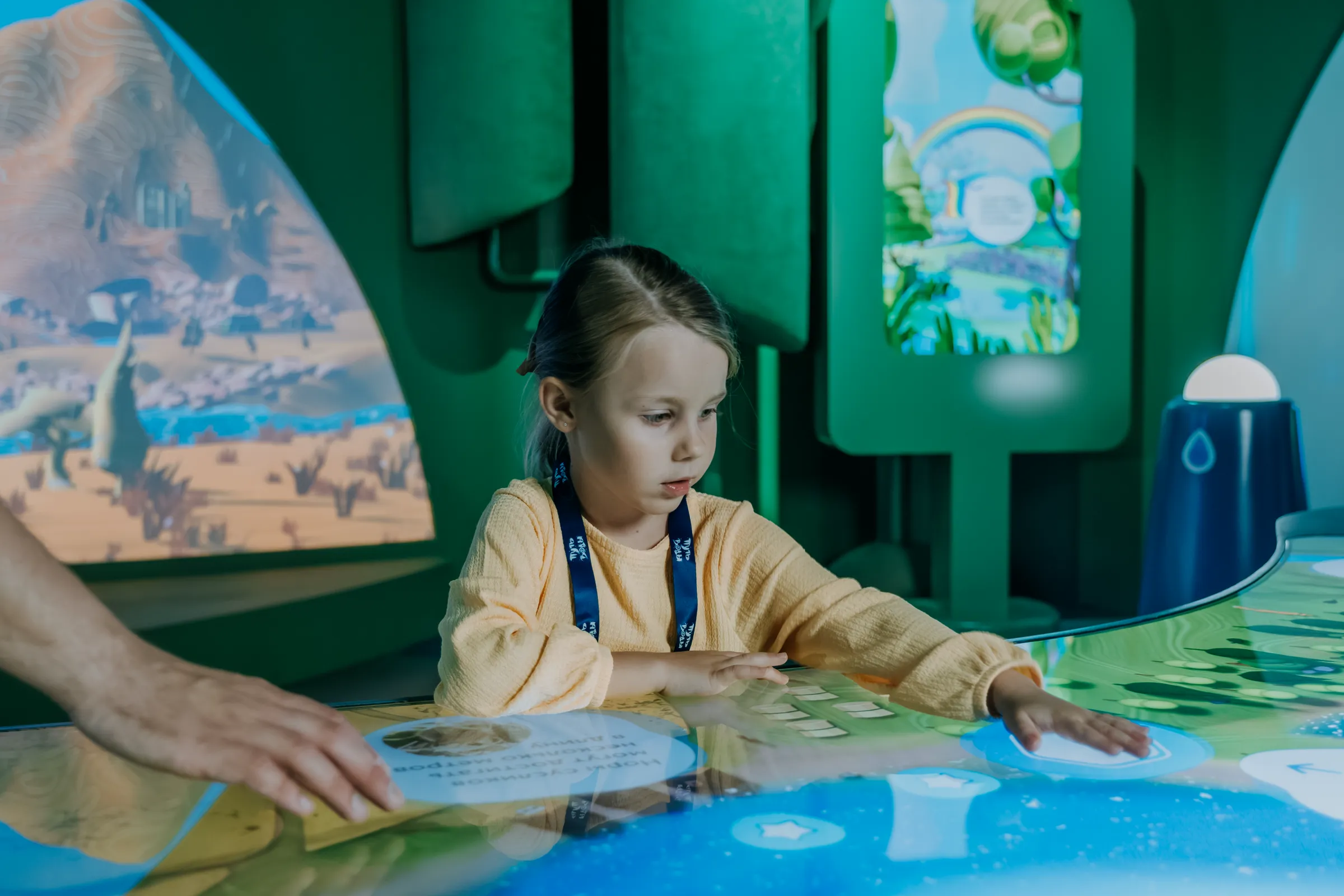
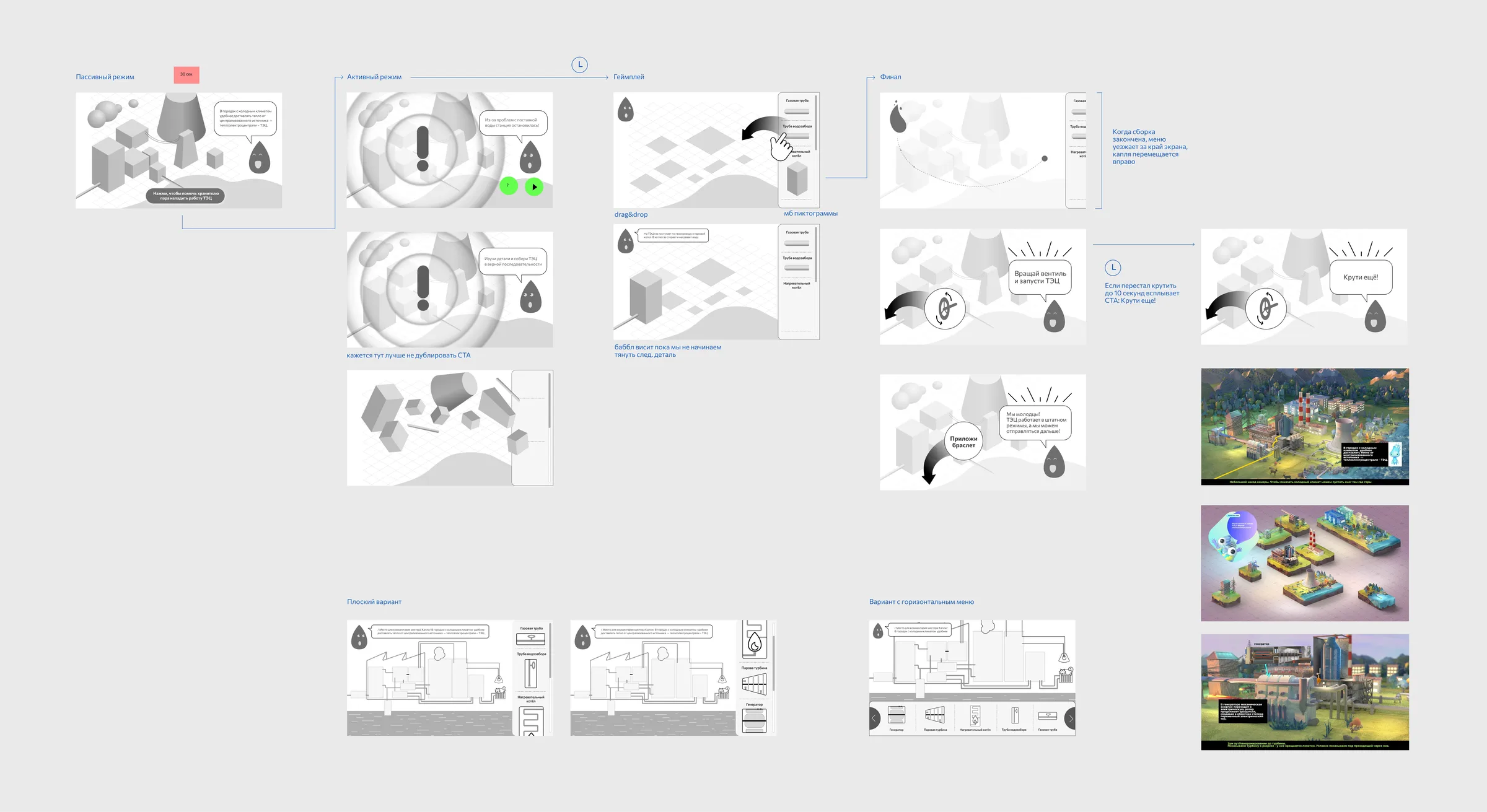
Each installation carries one key idea — physically, visually, without walls of explanatory text. Visitors shape a riverbed, generate energy at a hydroelectric station, and build a water-supply system.
A seven-year-old starts a waterfall with their hands. A teenager understands the mechanics of a hydroelectric station. An adult reads ecological data. Three generations share one route.
The zones build in intensity: Nature is lightness and beauty; City is mechanics and resource; Ocean is scale; Arctic is fragility. By the end, visitors reach their own conclusion.
Three characters represent the three states of water. They appear across the zones, explain processes, and become the key emotional anchor for children.


Water is born in the forest. Rain, dew, a spring — the first steps of an H₂O molecule. The journey begins here.
01 / 19The first impression is physical: a wall of water, sound and humidity. Visitors are not yet inside the exhibition, but water is already present.
Shifts perception before the first exhibit
02 / 19A projection tunnel: visitors pass through a water environment. Light, sound and animated movement create the feeling of entering the flow.
A physical transition between worlds
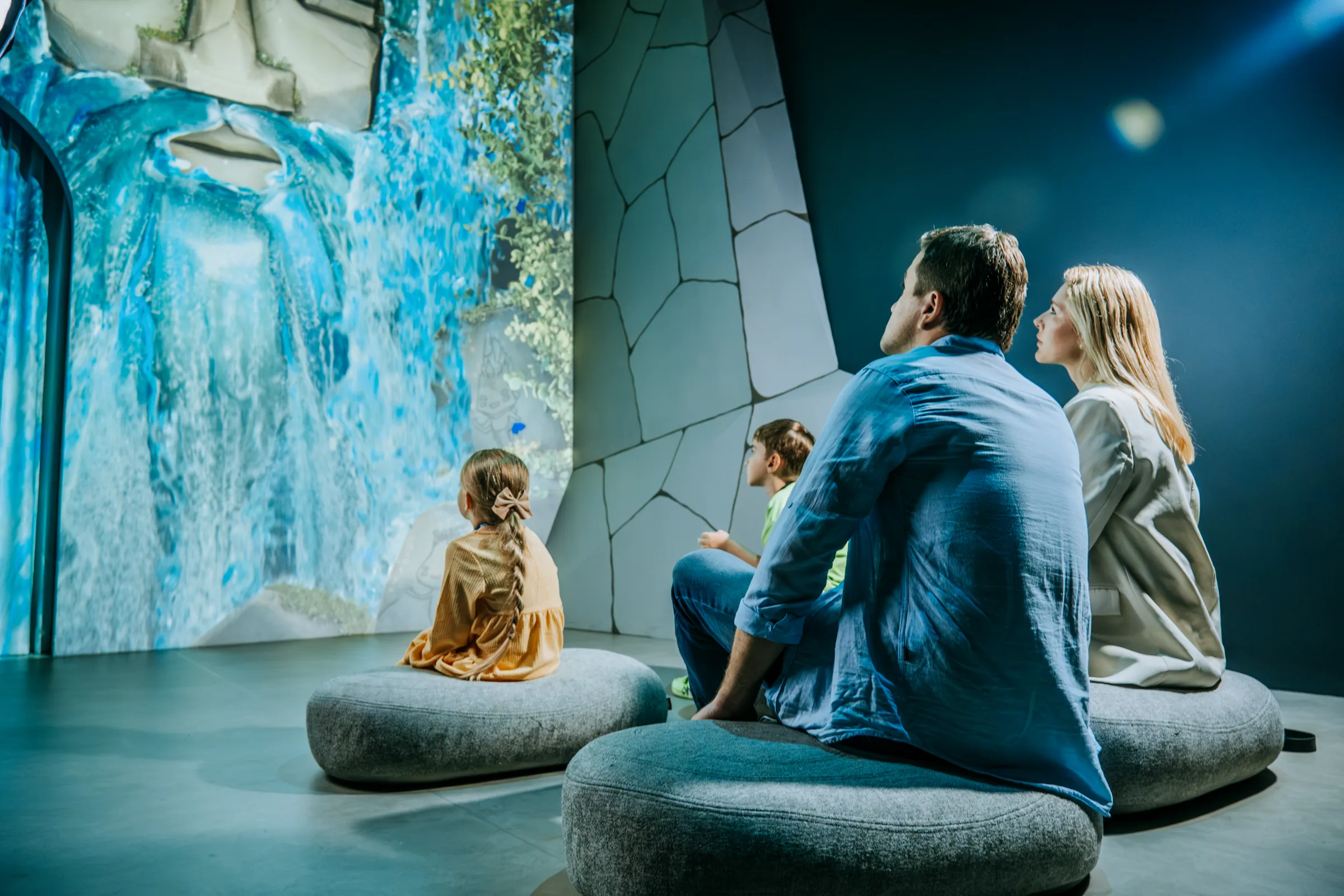
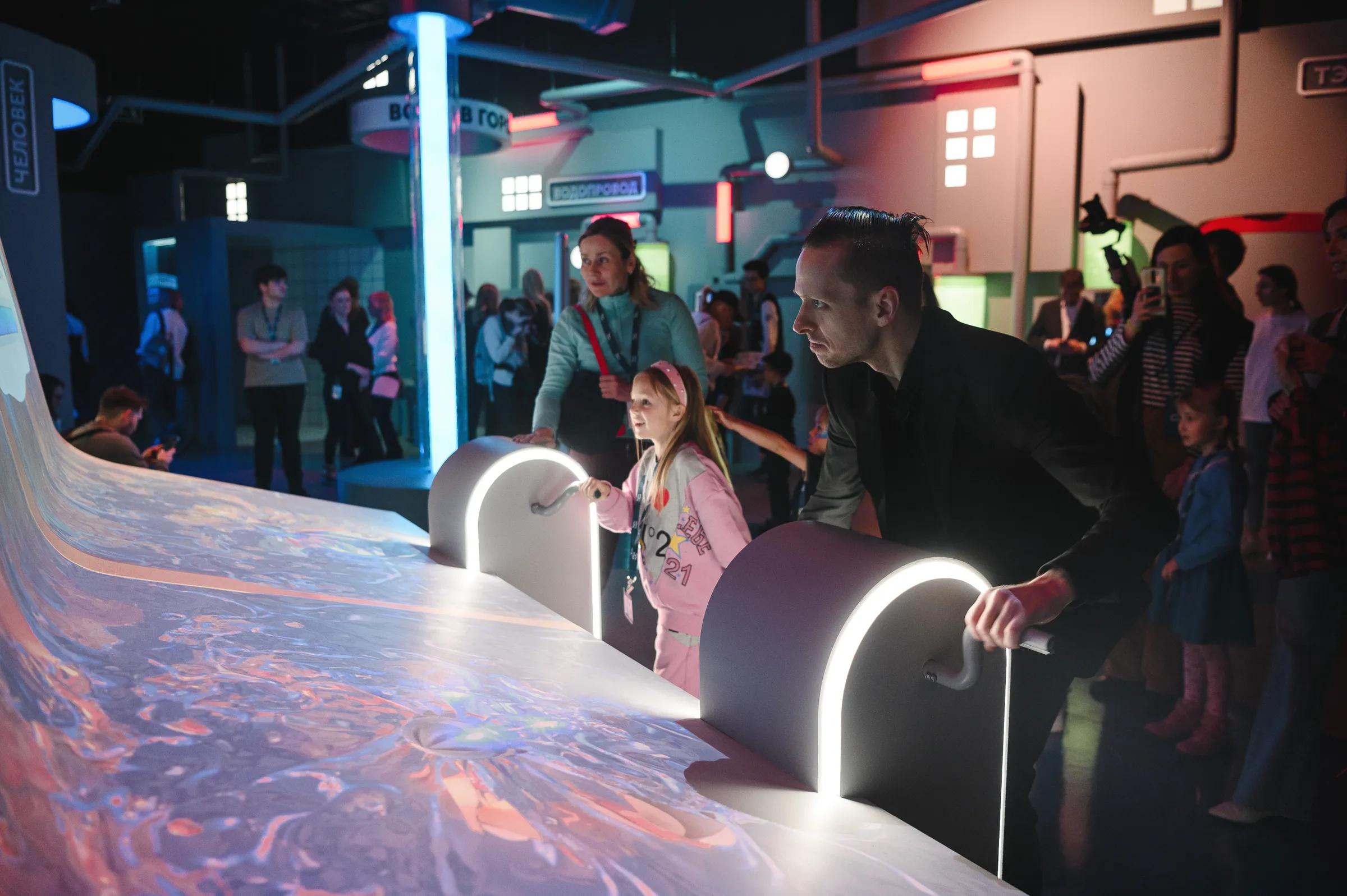
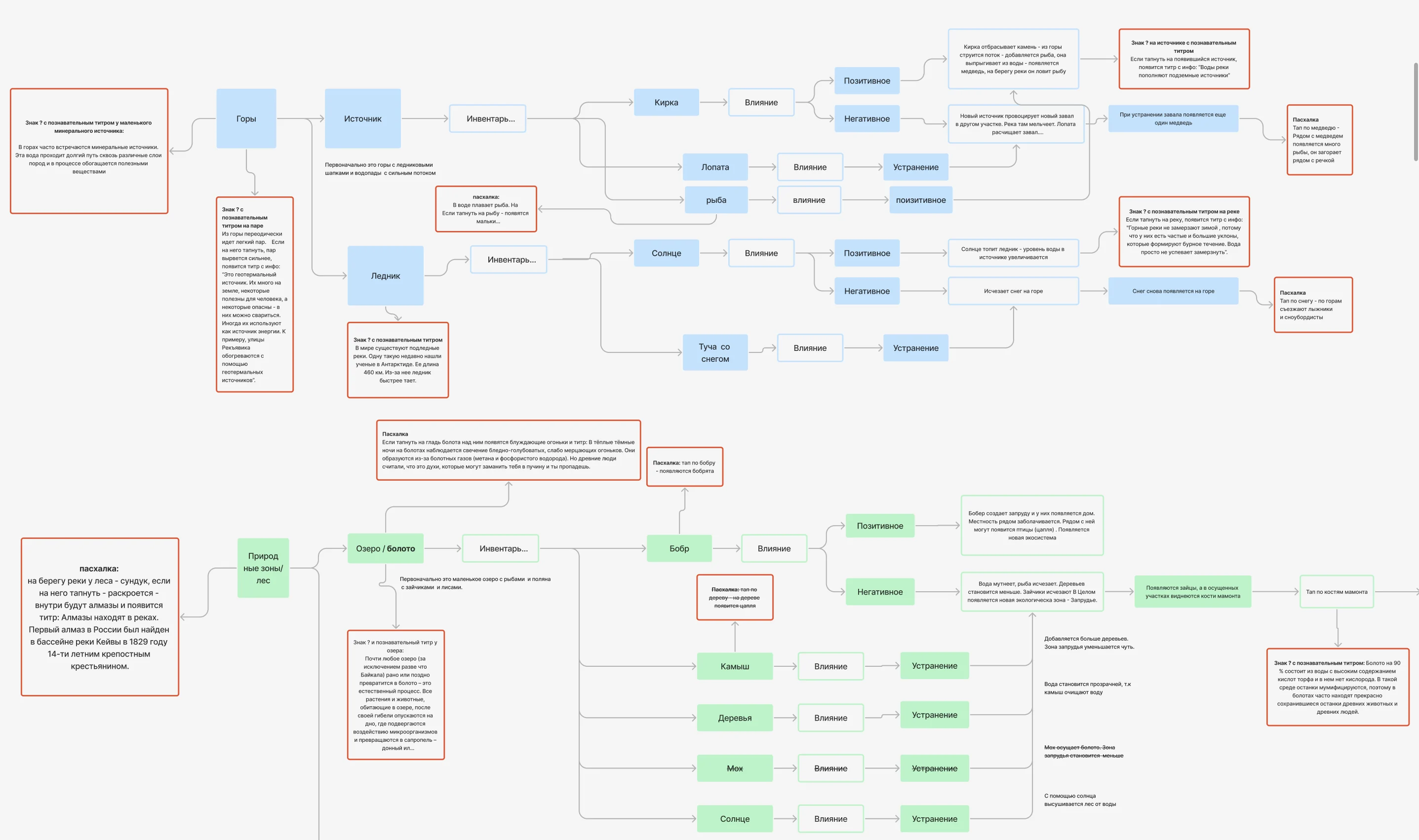
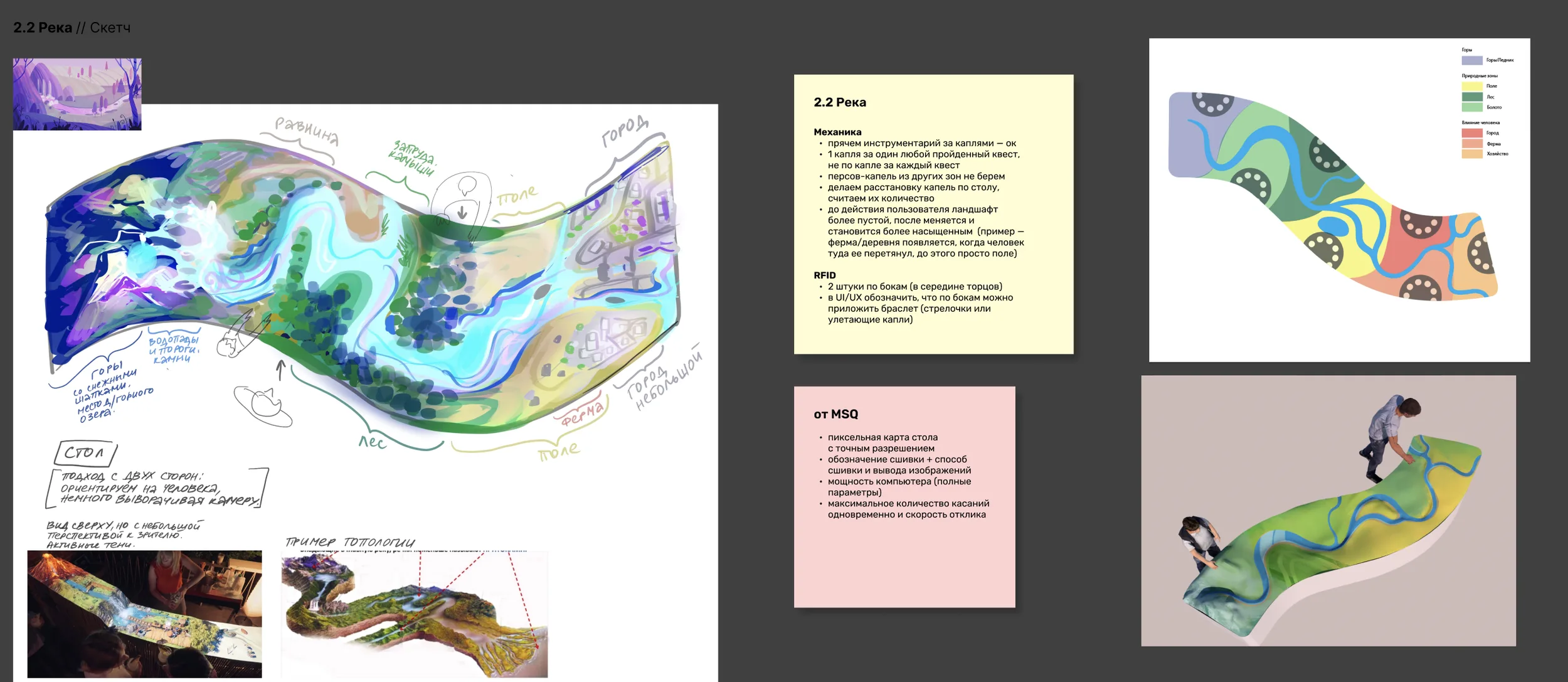
03 / 19Control the flow, change the terrain, create the riverbed. Water behaves according to real-world rules — in real time.
The speed of the river depends on the slope of the riverbed
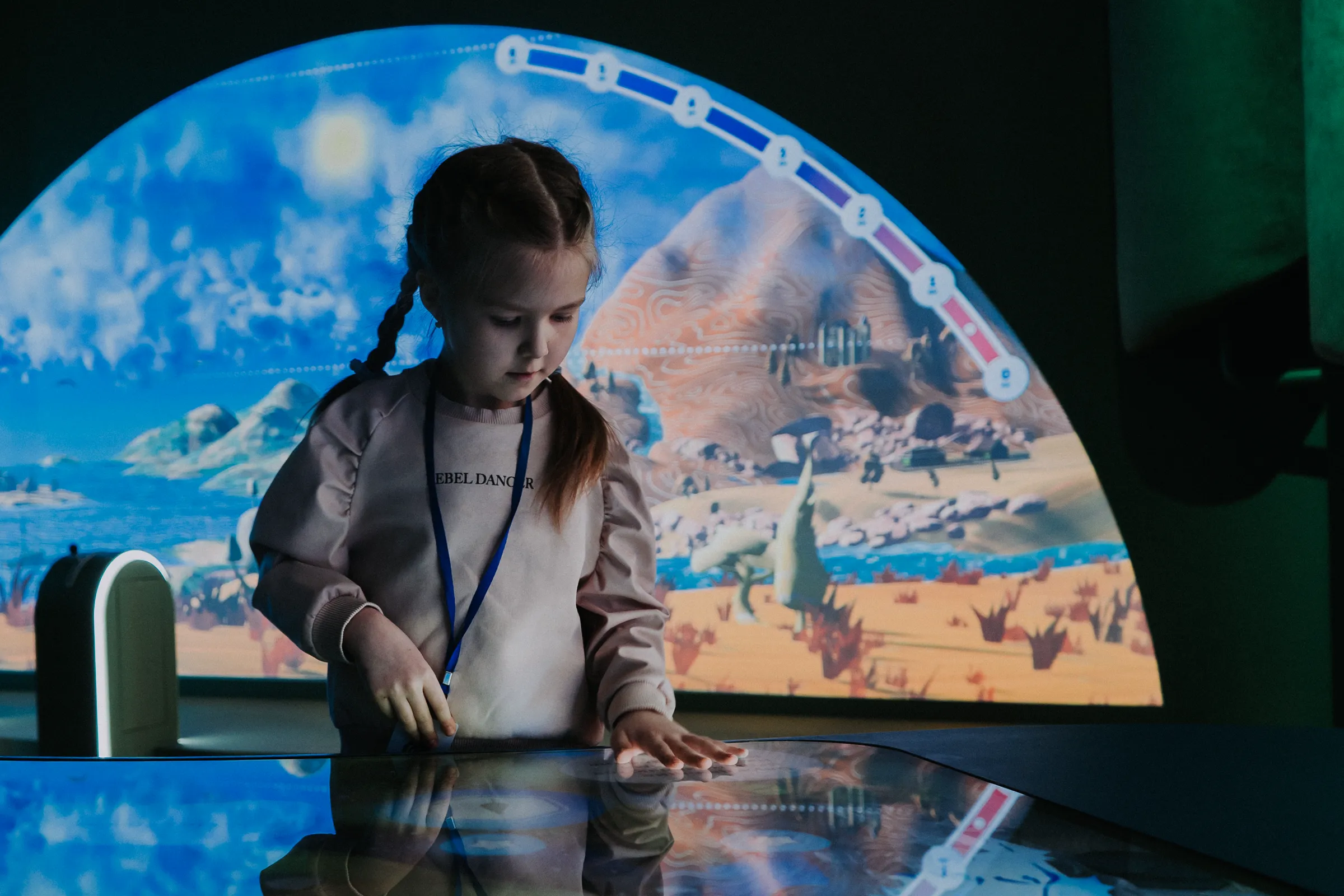
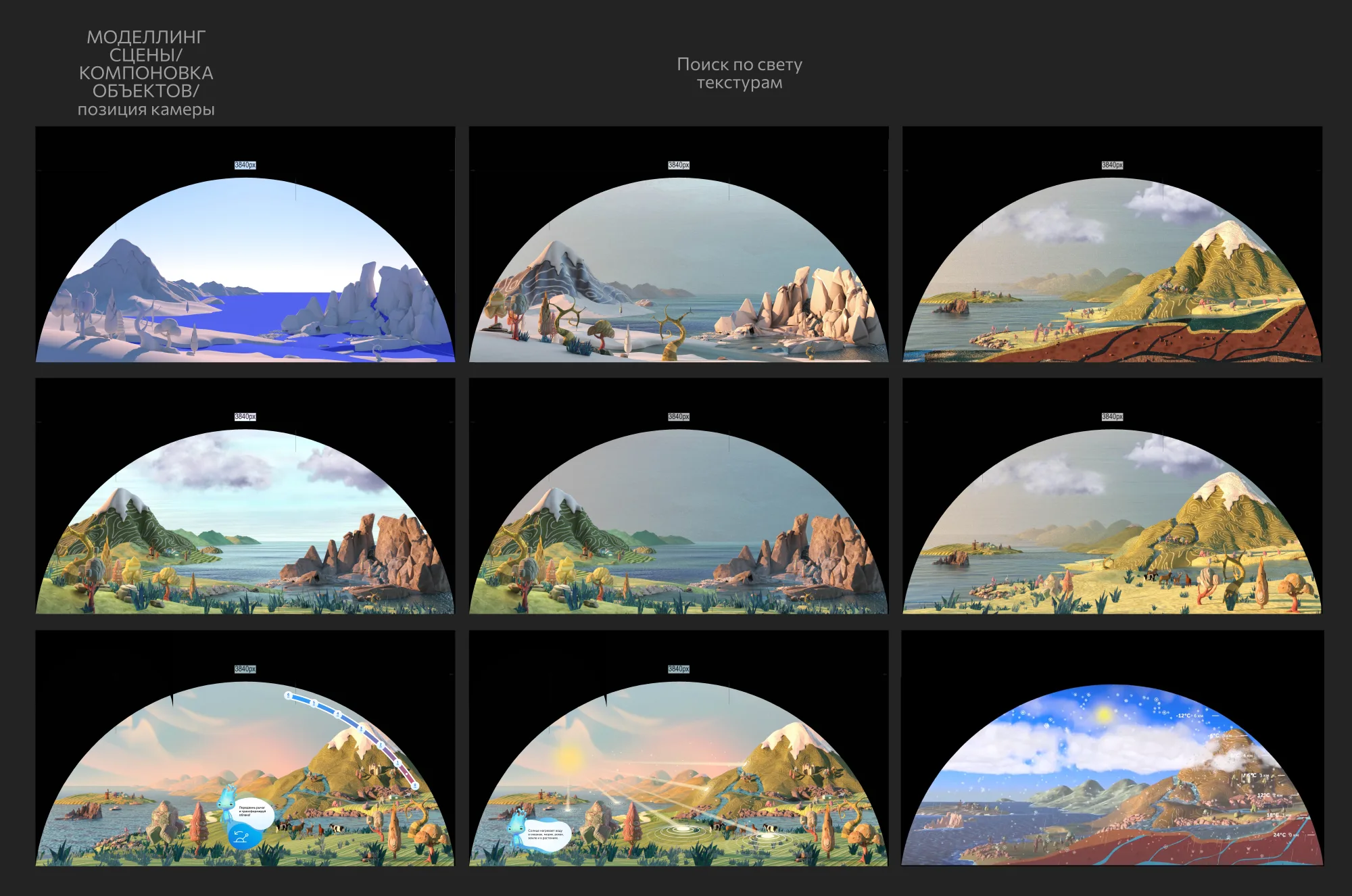
04 / 19A large multimedia installation showing evaporation, clouds, rain, soil and a spring. A closed cycle that never ends.
One water molecule completes the cycle in 9 days
05 / 19An immersion into the living ecosystem of a freshwater body. Fish, plants and light through water all respond to visitor movement.
Every touch changes the scene
06 / 19How much freshwater exists on the planet — and why so little of it is available. Global water reserves are visualized against the amount people can actually use.
Freshwater makes up 2.5% of Earth’s water. Accessible: 0.007%
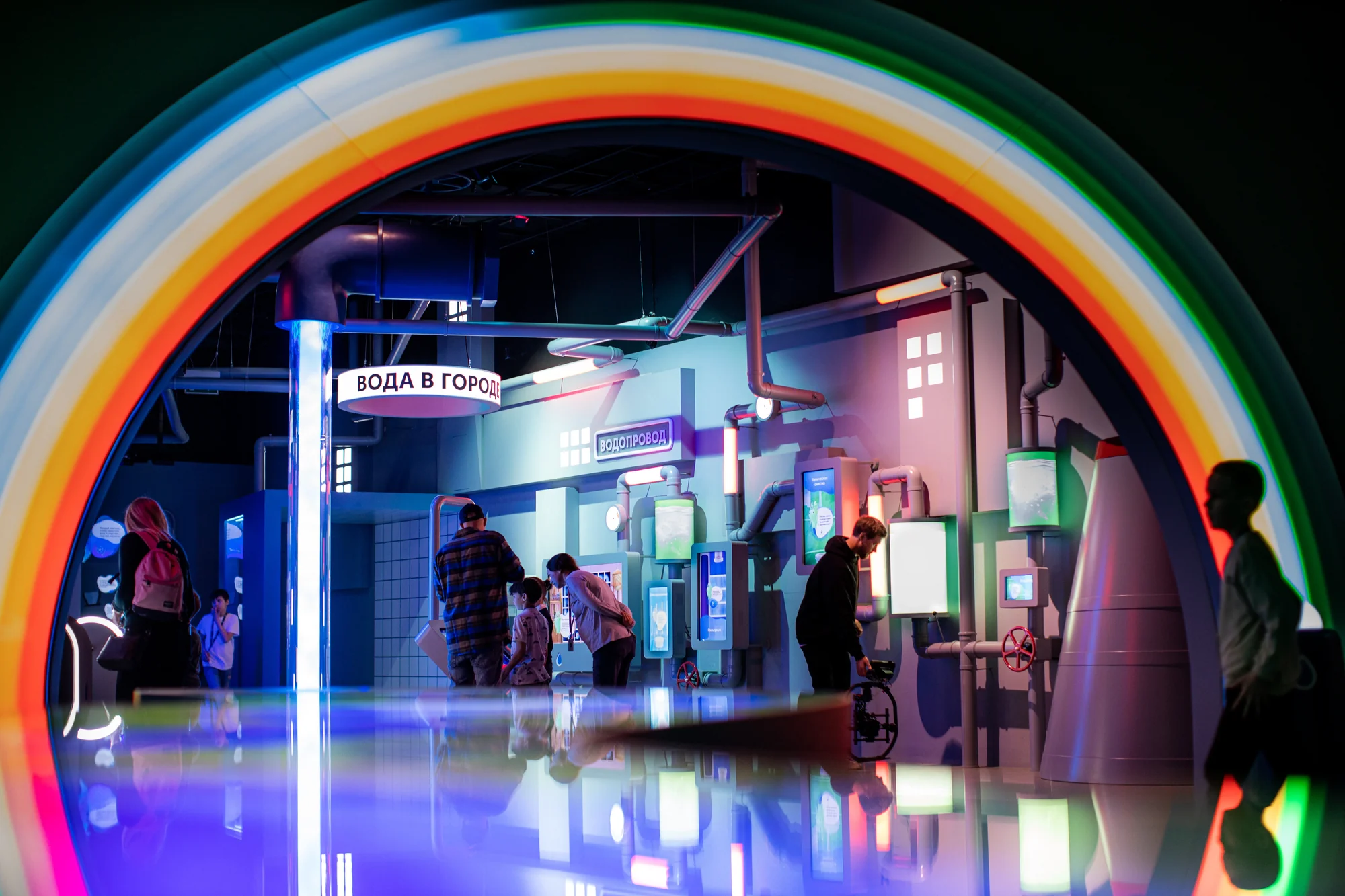
Water enters the city as a resource. It passes through hydroelectric stations, pipes and taps — and leaves transformed.
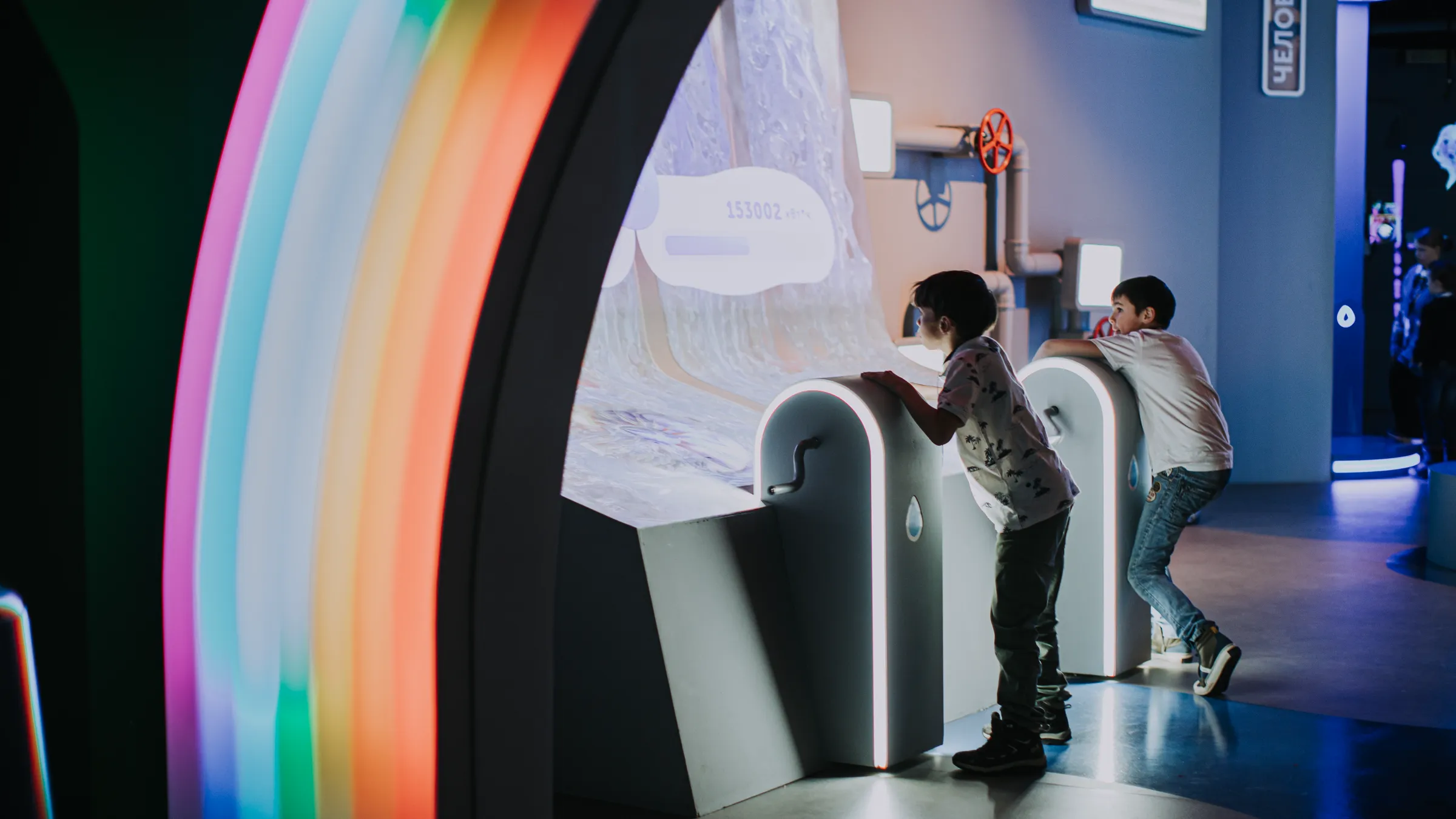
07 / 19How water flow becomes electricity. A model of a hydroelectric power station, from turbine to socket: the energy of flow that can be seen and heard.
Hydropower provides 17% of the world’s electricity
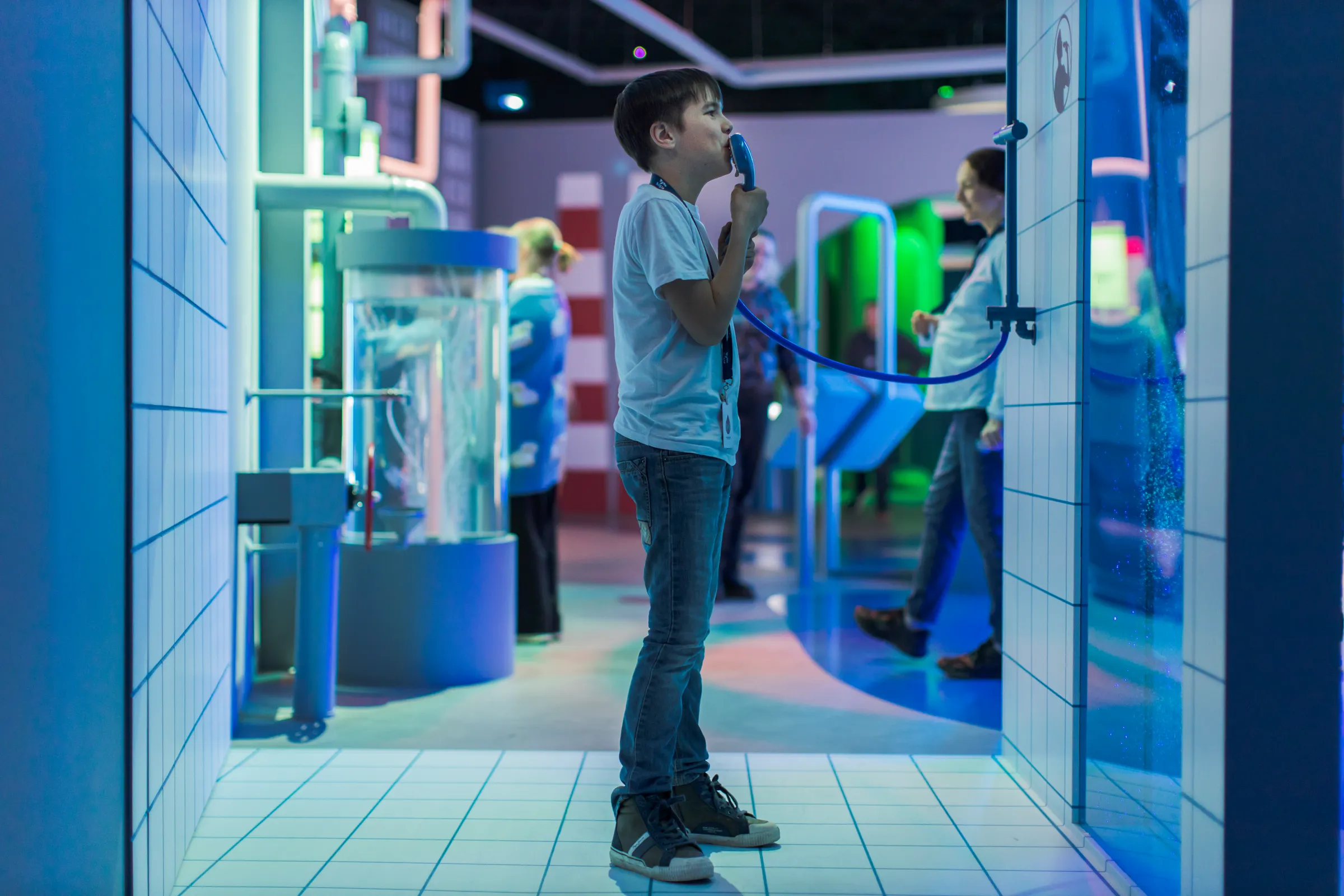
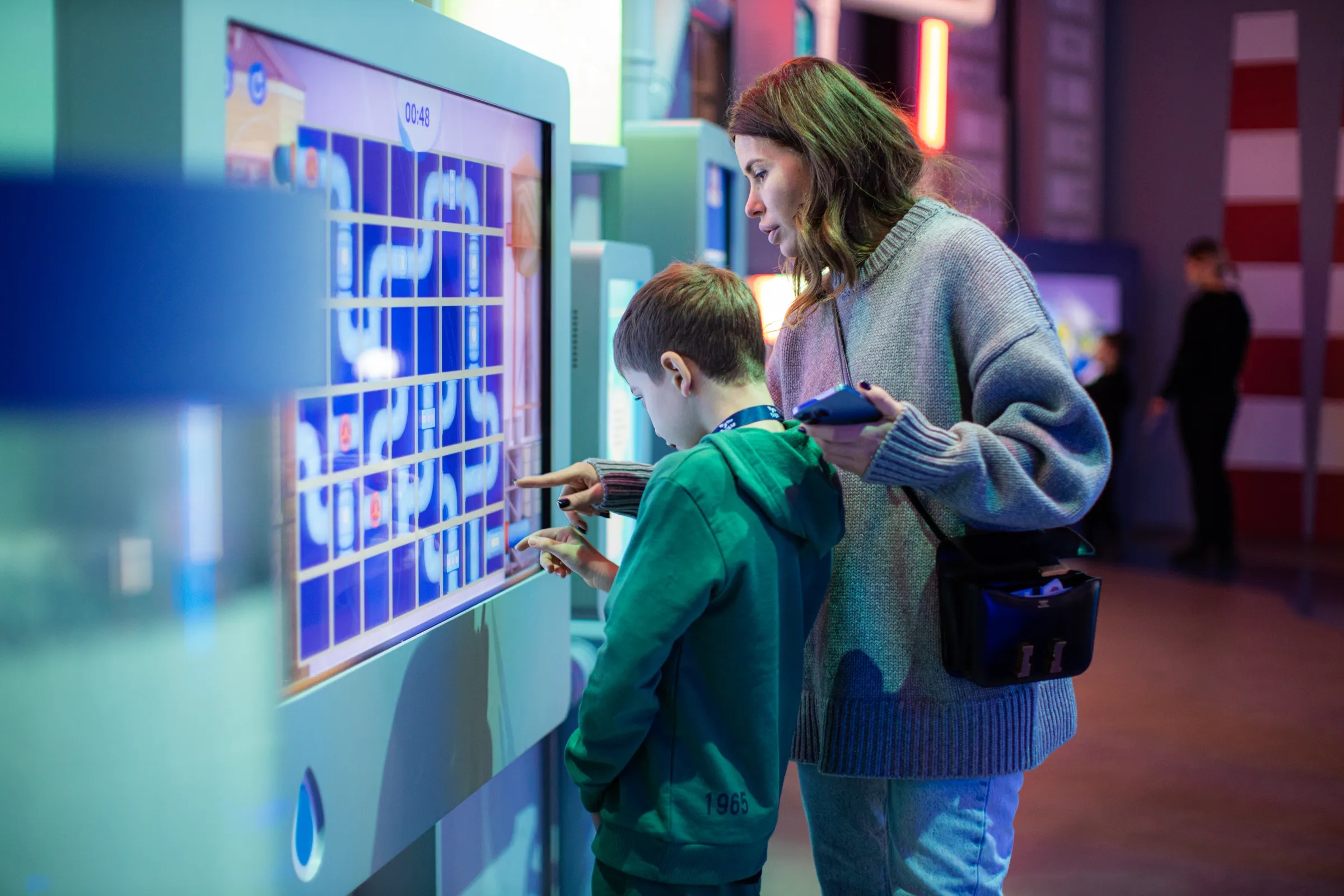
08 / 19The city water-supply network: from water intake to the tap. How water reaches your home — and why it is more complex than it seems.
Moscow’s water-supply pipes stretch for 12,000 km
09 / 19The full route of water through treatment facilities. Mechanical, chemical and biological treatment: every stage can be explored hands-on.
Before it reaches you, water passes through 10+ stages
10 / 19How much water does your day use? An interactive counter measures consumption for daily actions: showering, cooking, laundry, coffee.
An average Russian resident uses 250 liters of water per day
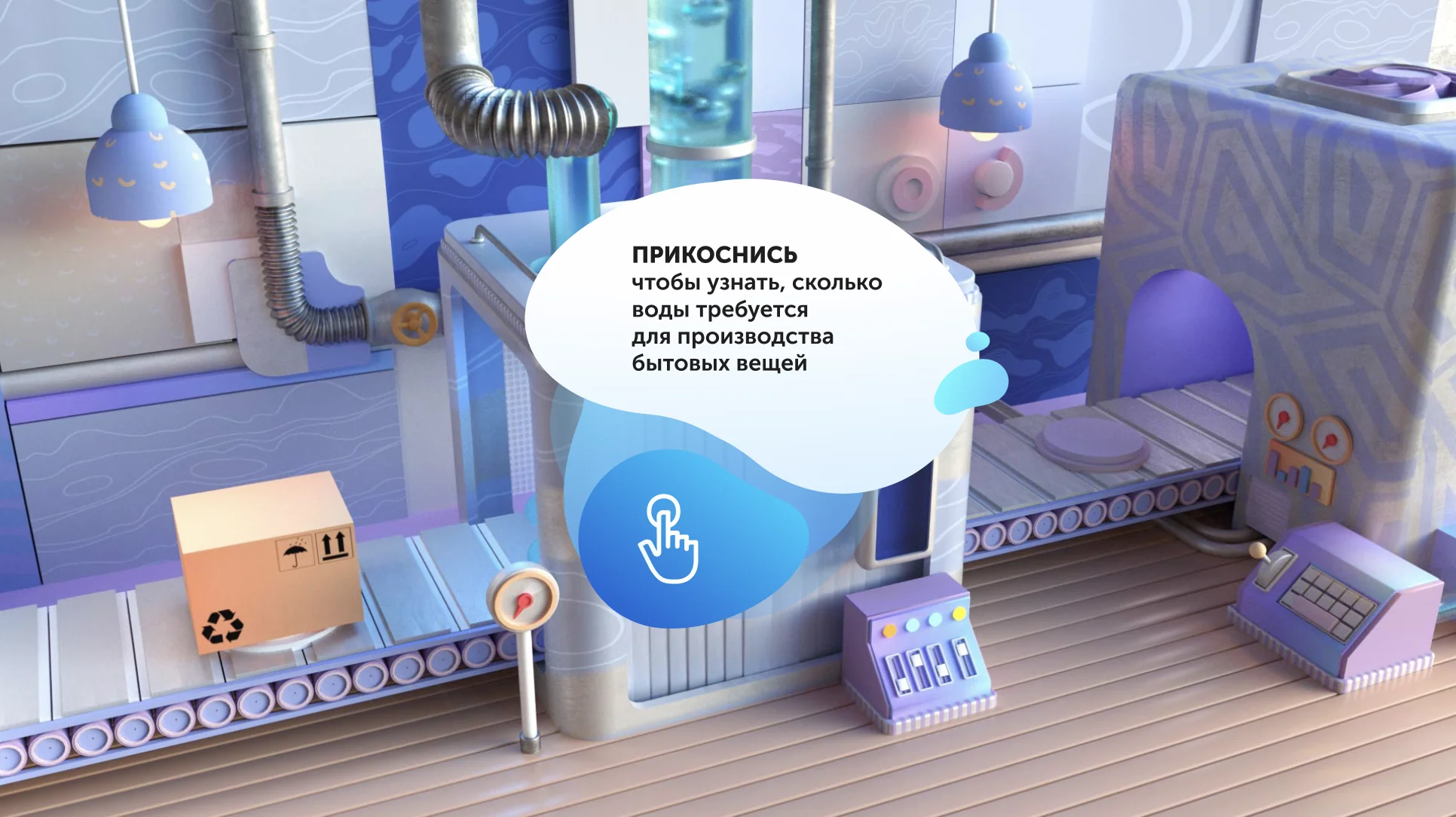
How much water does it take to produce a T-shirt, a phone or a cup of coffee? The water footprint of things we rarely think about.
1 kg of beef = 15,000 liters of water
What water hardness is, why scale is more than an inconvenience, and how different types of water affect the taste of food and drinks.
The taste of tea depends on water pH by 40%
What city streets wash into the drainage system after rain. How stormwater became a distinct environmental issue for the modern city.
80% of ocean pollution comes from land
How modern technologies help cities save water: sensors, smart taps, and reuse of wastewater.
Smart water systems can reduce losses by 30%
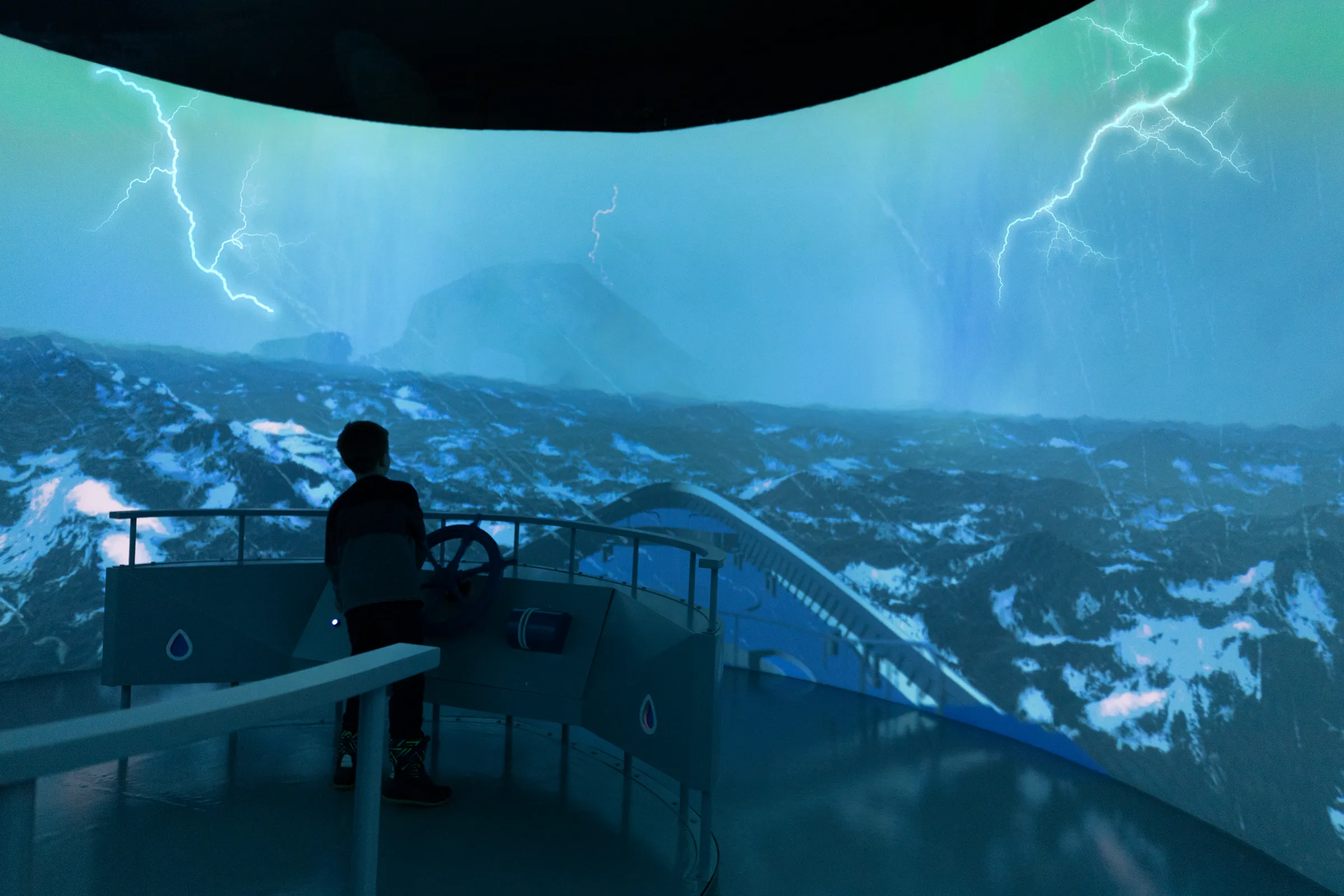
Visitors take the helm. The platform moves like a real deck. Steering a boat in a storm: 360° projection, live motion and the physical sensation of water.
15 / 19Visitors stand at the helm on a moving platform. It rocks like a deck in a storm. Around them is a 360° projection of the ocean. The boat responds to their hand movements.
Moving platform: a physical sense of rocking and sea motion
16 / 19A descent into the depths: from surface waters to the abyssal zone. Each layer is a different environment, with its own life forms, light and pressure.
80% of Earth’s species live in the ocean; less than 5% of the deep sea has been explored
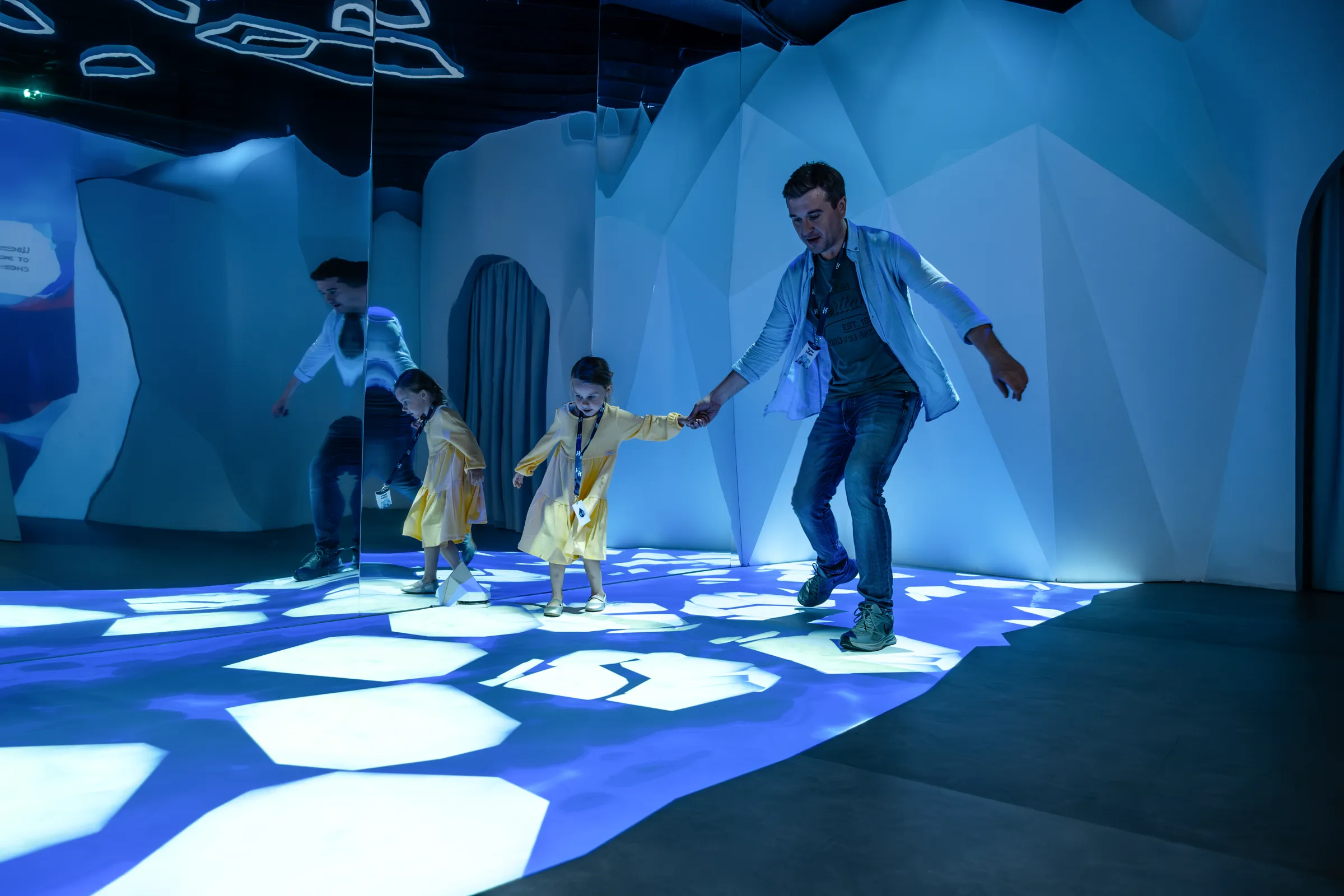
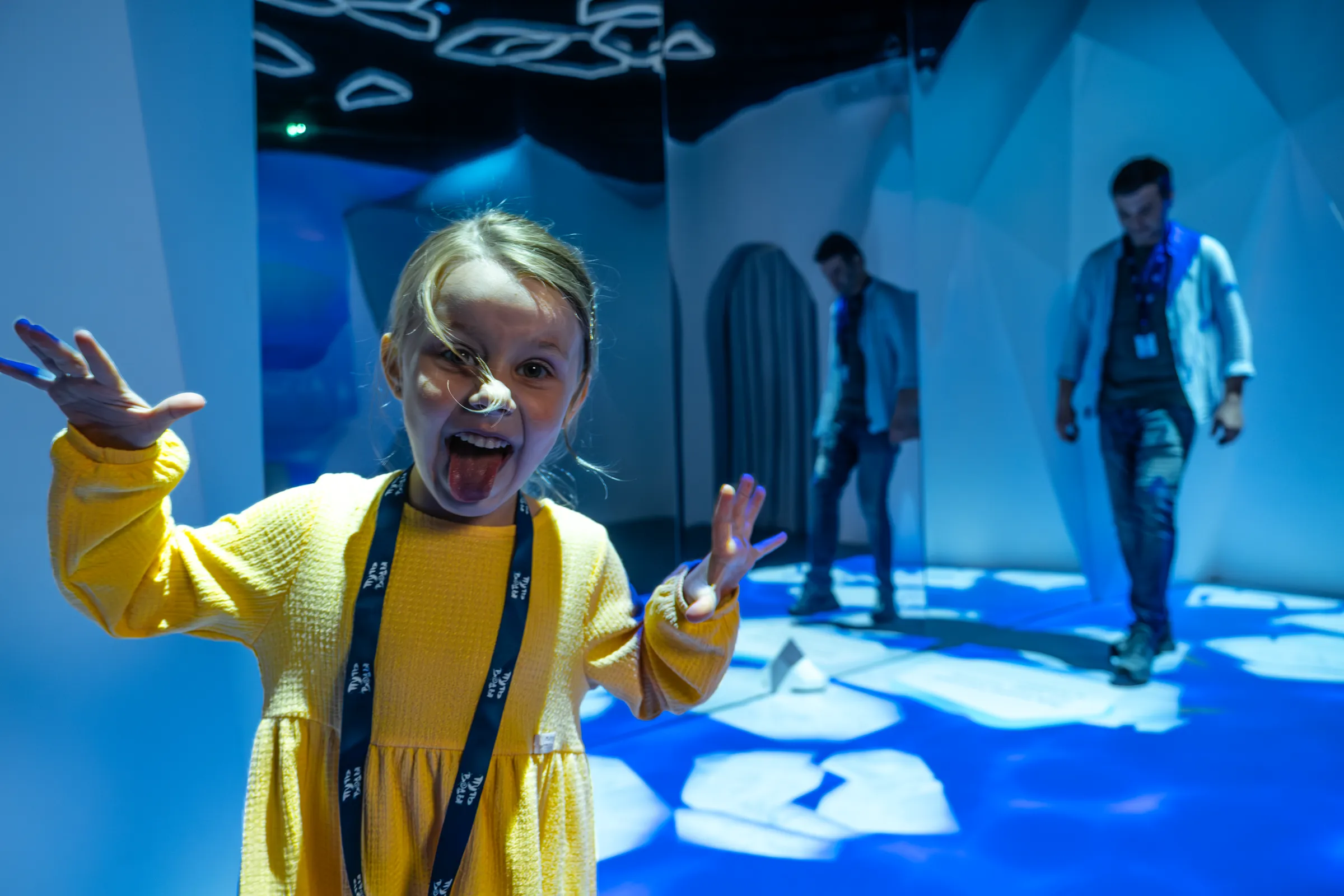
The final chapter. Ice is the memory of water. The Arctic preserves the climate history of hundreds of thousands of years — and is melting faster than we thought.
17 / 19Ice cores as keepers of time. Air bubbles in Arctic ice contain the air of ancient eras — in a sense, the air once breathed by dinosaurs.
The oldest ice preserves air up to 800,000 years old
18 / 19An interactive model showing what changes when sea levels rise. No panic — only honest data and space for visitors to form their own conclusion.
If all ice melted, sea levels would rise by 65 m
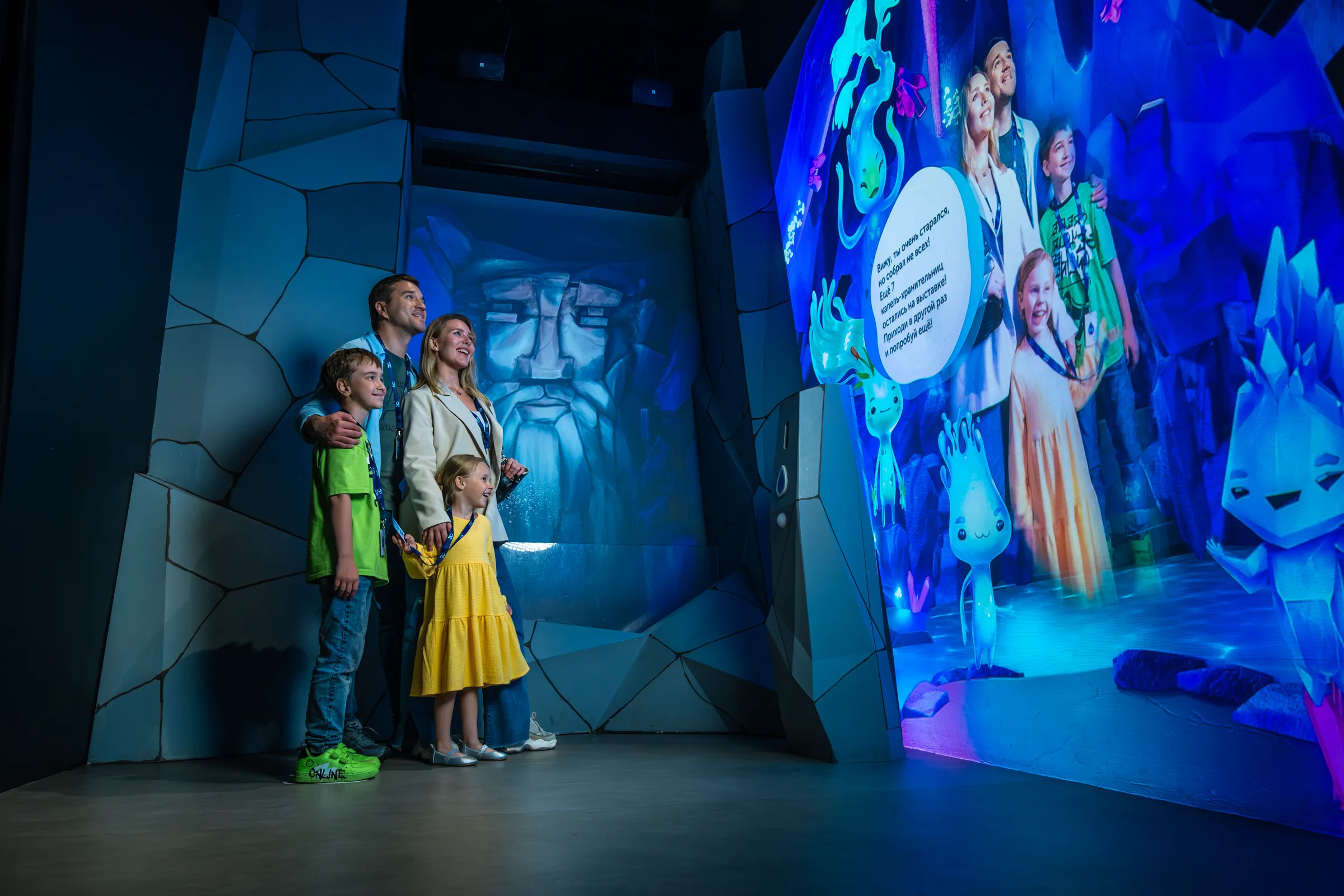
19 / 19The final point of the route. Visitors tap their wristband and return to the Spirit of the Waterfall the power collected across all zones. A personal artefact: the path is recorded, the task is complete.
The goal is to restore the Spirit of the Waterfall by completing the full route
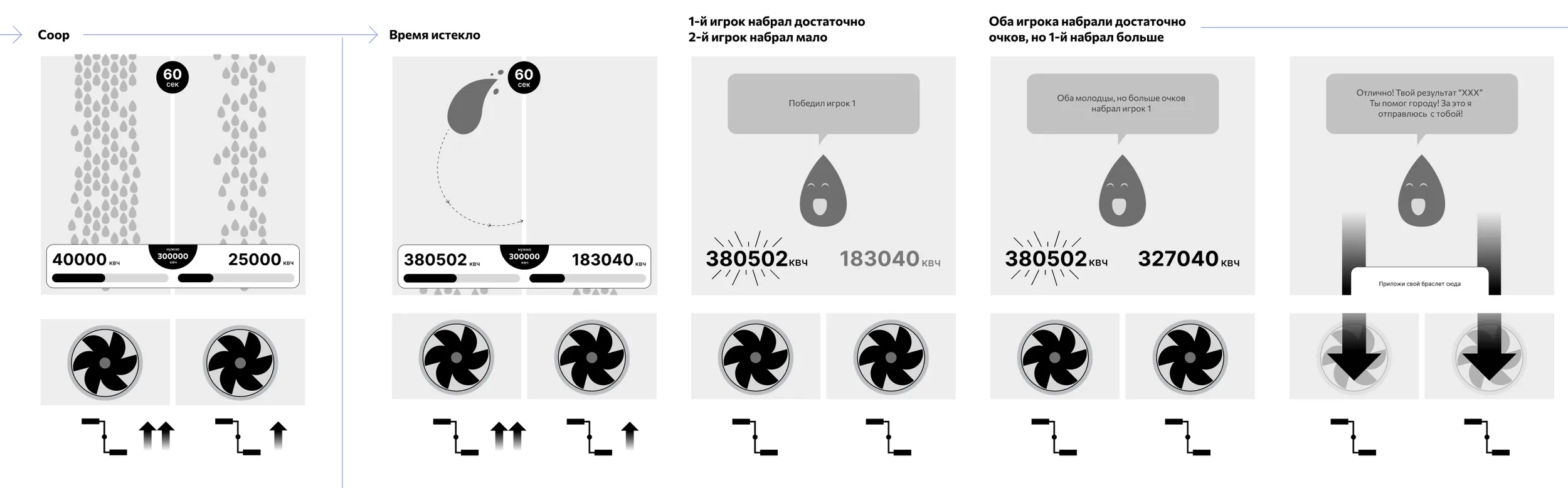
Each visitor receives a personal RFID wristband. It becomes the key to every installation in the exhibition.
Each of the 19 installations has a reader. Tap the wristband and receive a drop. Completing the whole route is the main goal.
Nature, City, Ocean and Arctic — each zone unlocks its own drops. The route leads forward like a river current.
At the final station, the wristband is read and the Spirit of the Waterfall receives the power collected along the route. The task is complete.
Water was here before us and will remain after us.
The task: make people feel it in their bodies.
⤢
⤢
⤢
⤢
⤢
⤢
⤢
⤢
⤢
⤢
⤢
⤢
⤢
⤢